


After leaving Turkey we will be entering an area known as the Caucasus. The nation states that compose the Caucasus today are the post-Soviet states Georgia (including Adjara and Abkhazia), Azerbaijan (including Nakhchivan), Armenia, and the Russian Federation. The borders of Azerbaijan, path to the Caspian Sea and to Turkmenistan, still remain closed since the beginning of the Russian war. The area of the Russian federation is also closed to Americans. The nation to the south, Iran, although accessible, is still a dangerous place for an American to travel. That means our travel further east will not happen.
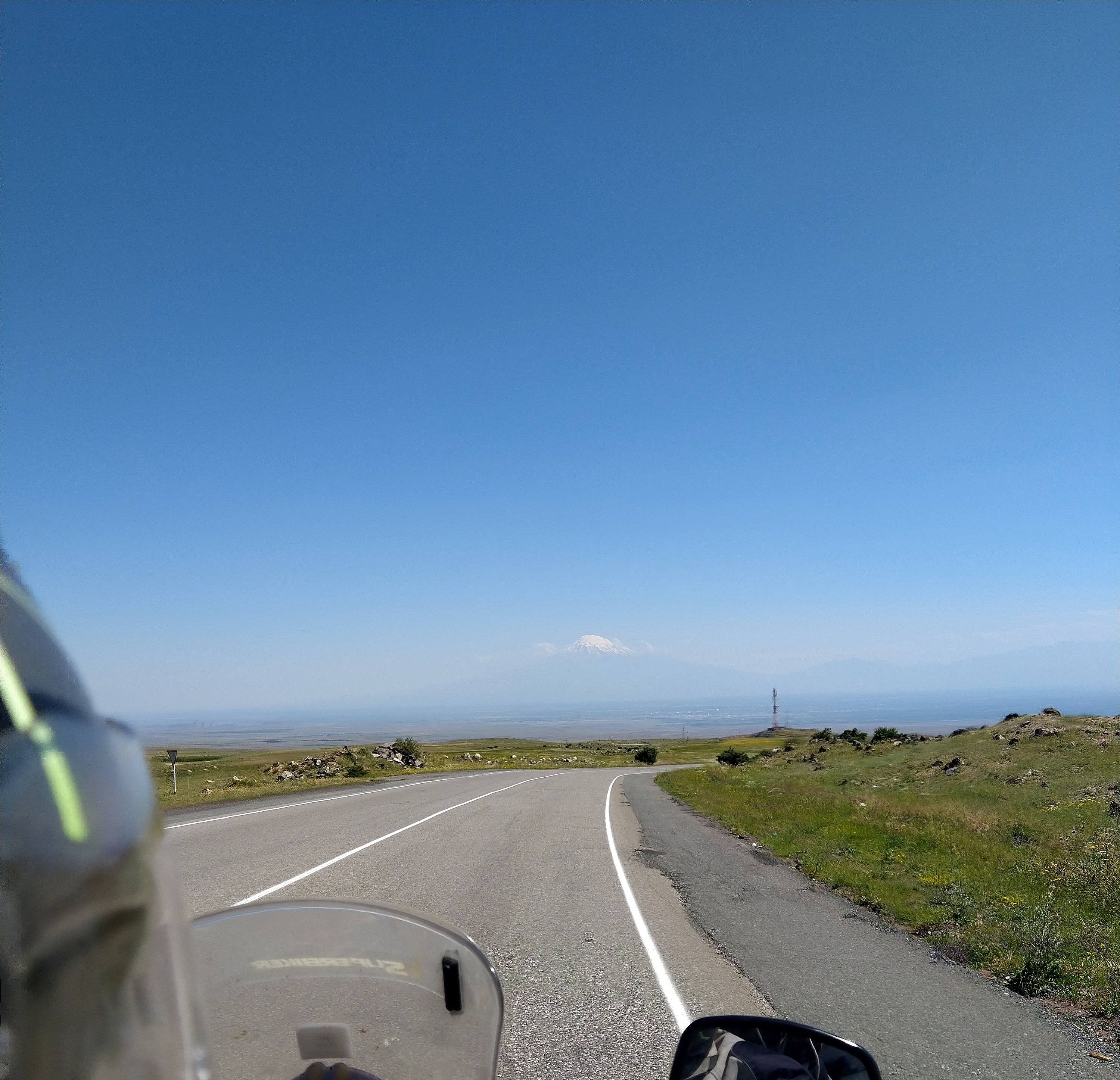
The border between Armenia and Turkey remain closed due to civil unrest and a war. On our way to Georgia we cross a pass at 8400 feet (about 2800 meters). Looking to the east towards the Armenian border we see snow capped mountains and in the distance, Mount Ararat. The distinction of all the colors is just amazing with the bright blue sky, white snow-capped mountains and then green grass in front of us stretching towards the mountains. Exiting turkey through immigration and customs is a breeze.


The Georgia border is under construction and very disorganized. I happen to get in the line of an agent that did his best to keep us out. It was just one problem after the next. Melanie and I were separated and she was escorted through the main immigration terminal with people walking across the border. She made it through fine and had to wait on the other side for me. I handed over my passport and after checking all the stamps in my passport, looking at me and then back at the passport again several times, they finally stamped that. Then they wanted the paperwork for the bike. That’s where the trouble started. In Europe they have a hard copy registration for vehicles, sort of like our driver’s licenses. Since I did not have one, they kept accusing me of forging the paperwork for my bike. It also did not say United States of America on any of the paperwork. Over and over again I explained to them that no states in the US have United States of America on the registration. The license plate on my motorcycle also just says Alabama. There is nothing noting the country of origin which is common in many other countries around the world. With the help of another immigration official, on my side, he finally convinced the official I was dealing with that everything was legit. Then he accused me of not knowing how to ride a motorcycle since he did not see a motorcycle endorsement on the front of my Alabama driver’s license. He gave it back to me and told me I could not enter. I turned the driver’s license over, where the motorcycle endorsement is located, and sort of tossed it back to him. He finally agreed to let us enter his country. This was actually the first country I ever had this kind of problem crossing a border.
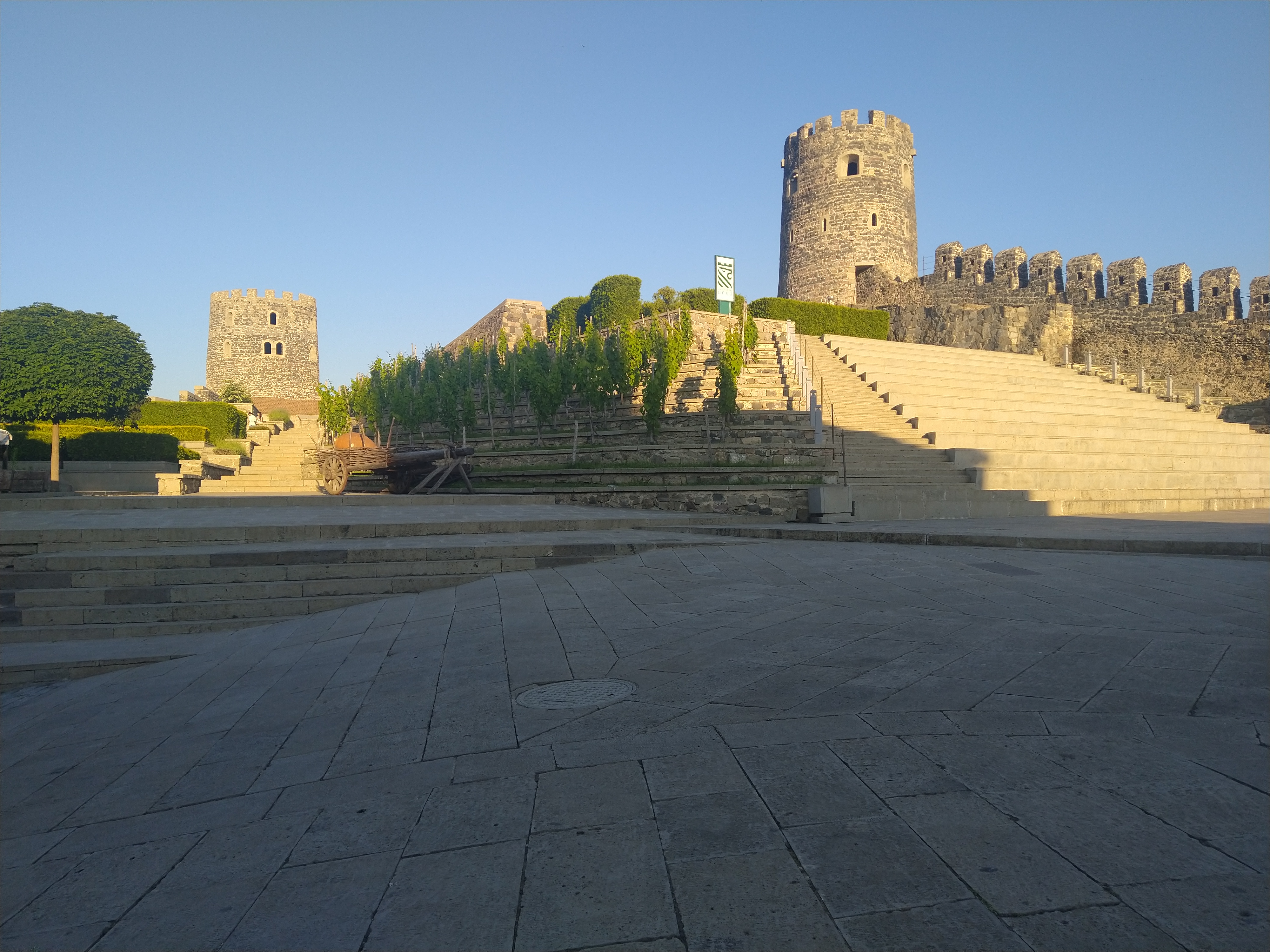
Victoriously, I thanked the other agent, hopped on the bike and joined Melanie in Georgia. We proceeded a little south and east, towards Armenia, to a town called Akhaltsikh. The roads were decent but the traffic was typical of these areas. Trucks and cars give a little heed to any rules on the road. Trucks would pass two to three wide, in your lane, and you would just have to get out of the way. One of the things we wanted to see in town was Akhaltsikhe (Rabati) Castle. We found a nice cozy little hotel just down the road from the castle, parked our bike inside the gate, and went exploring. Visiting the castle was a real treat. Akhaltsikhe Castle was built in the 9th century and has been seized and occupied by many empires, including the Ottomans. In 2012 the Georgian government spent millions of dollars restoring this castle for tourism in the central area of Georgia.


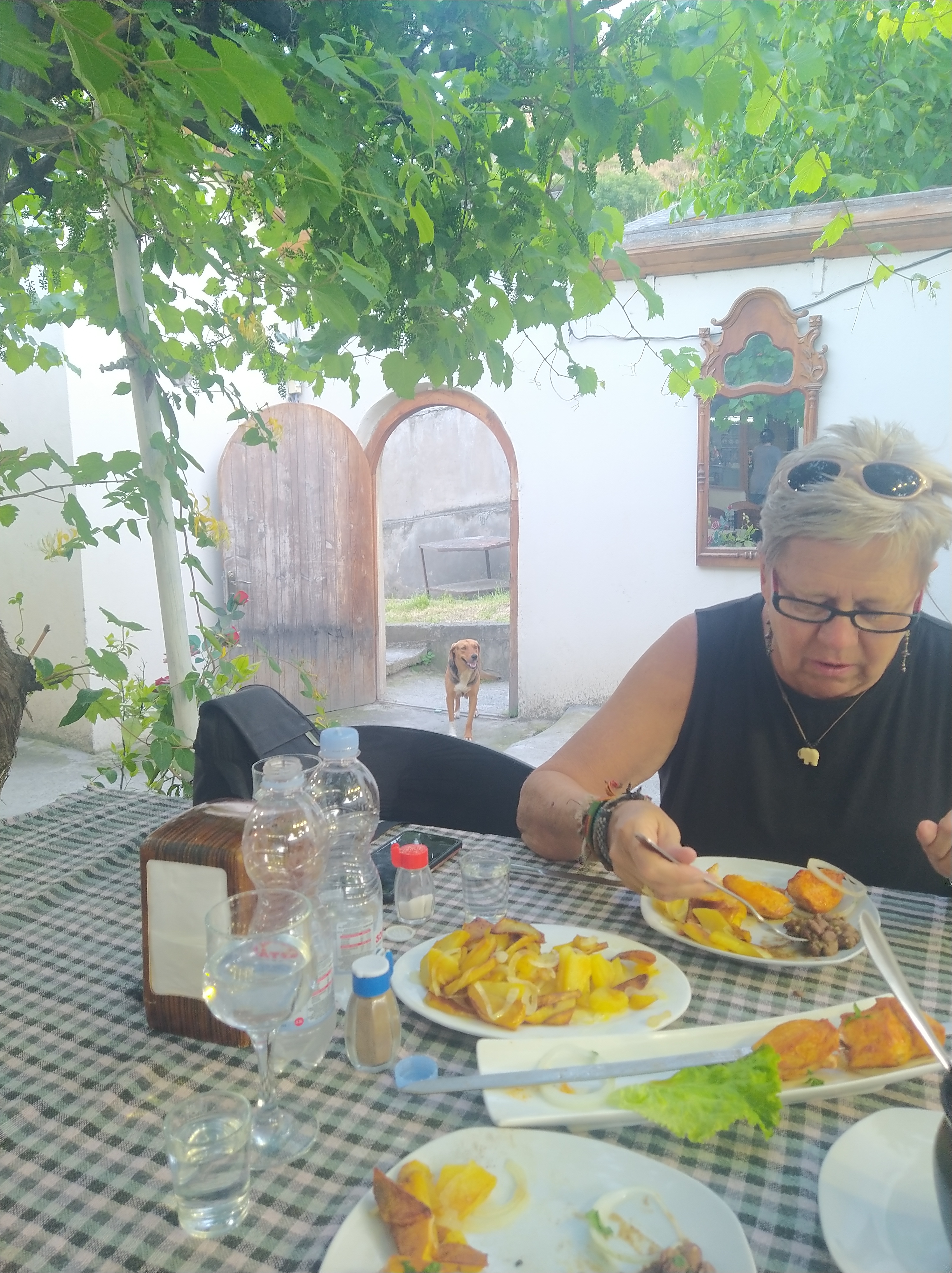
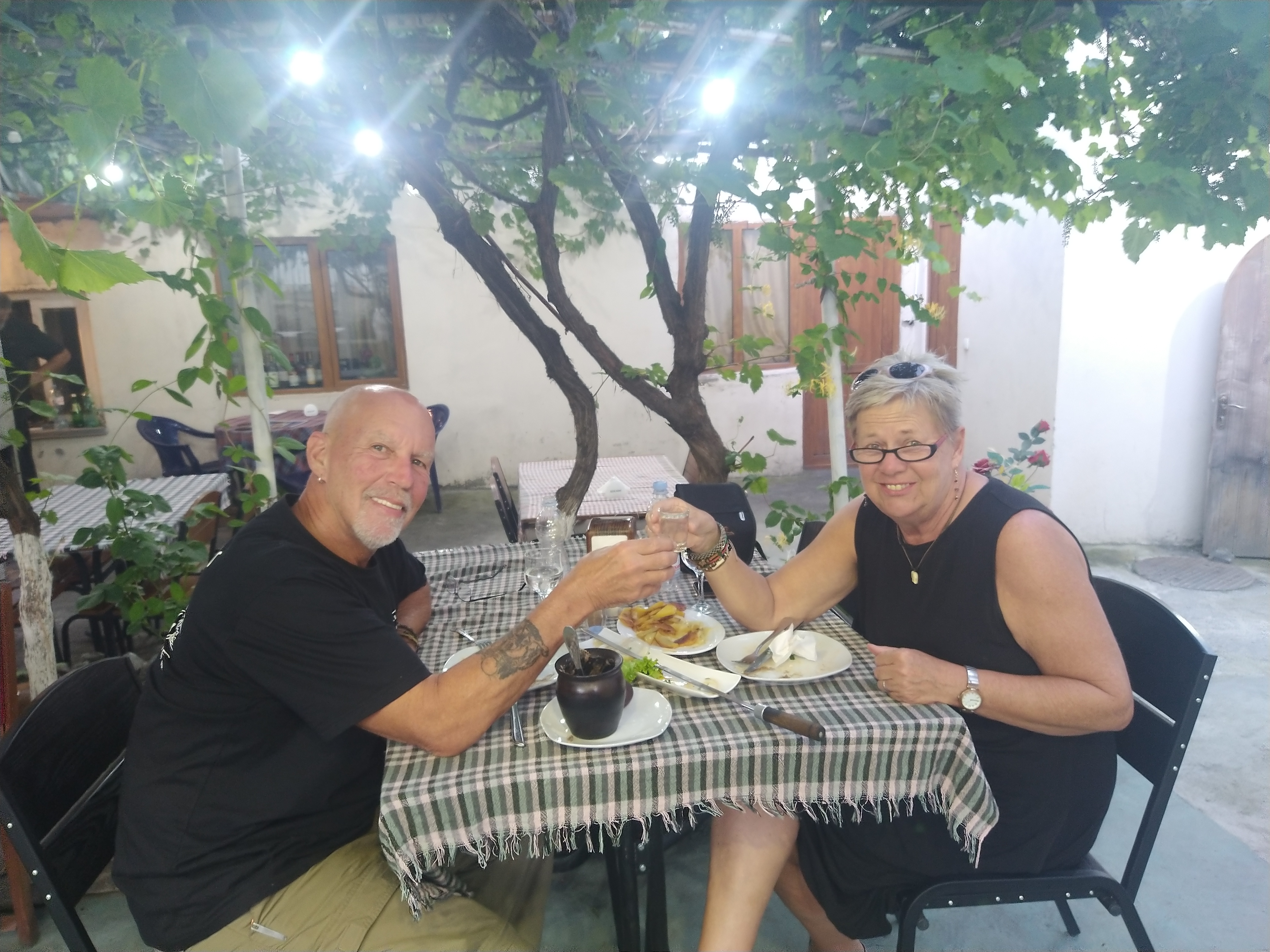
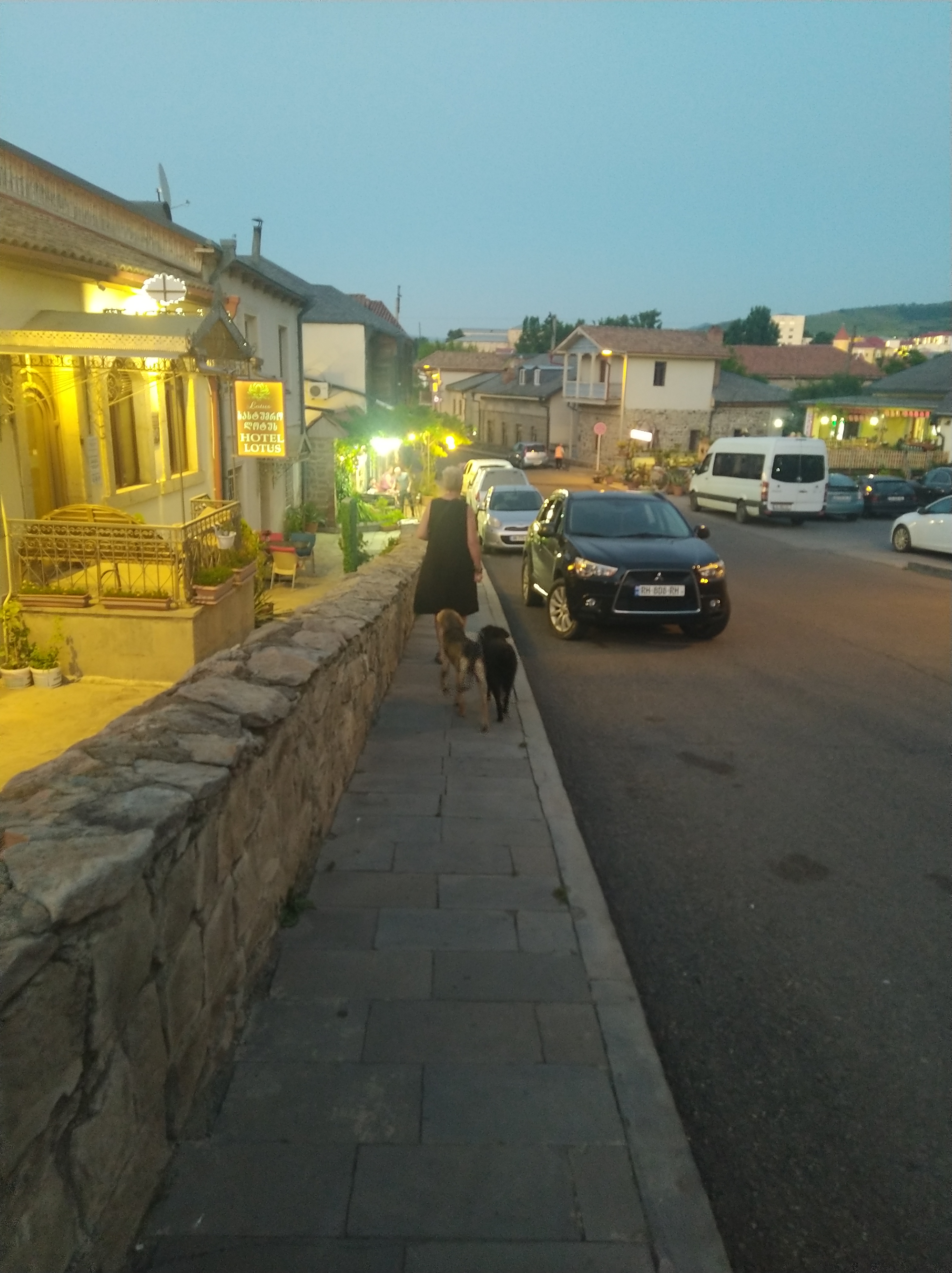
Our hosts had recommended a small restaurant just down the street for dinner. We walked in and it felt like walking into a friend’s house. We ordered a couple traditional Georgian meals. They had a cat there that loved cuddling up to Melanie on her lap. There were also local dogs that wanted to come in for a treat. They were very respectful of the space and just laid down in the doorway to watch us eat. At the end of the meal The owner treated us to a couple shots of homemade apricot vodka. When we left we made sure to bring a couple scraps to feed the pups.
The next morning was just as gorgeous and we headed towards the Armenian border. The exit of Georgia and the entrance into Armenia was a breeze just taking minutes. The road from the border was just a disaster. It was like it had been bombed for days. Broken asphalt, dirt and mud, and large rocks dumped down to fill the holes were our obstacles. We somehow survived and made it to the town of Yerevan.

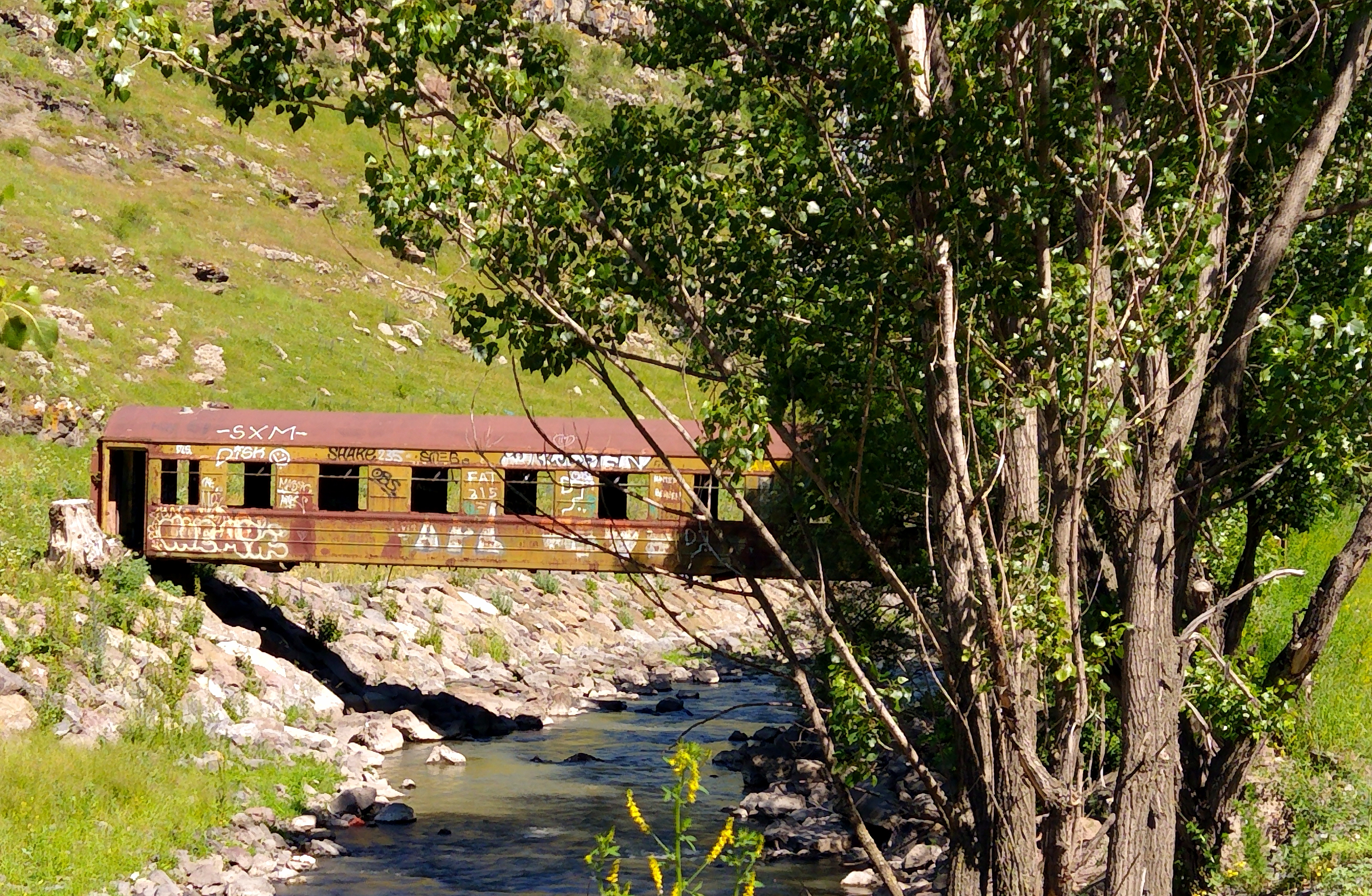
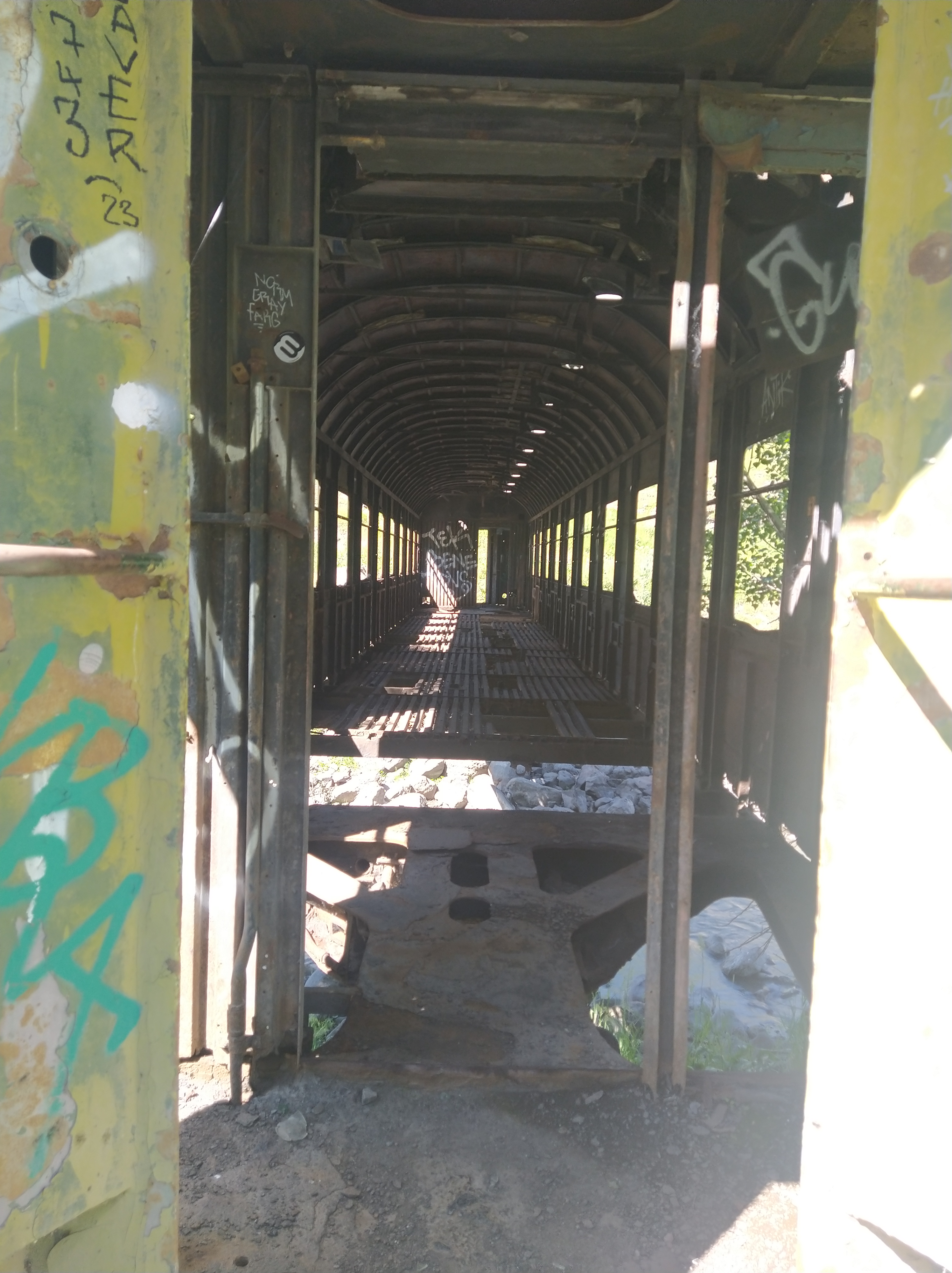
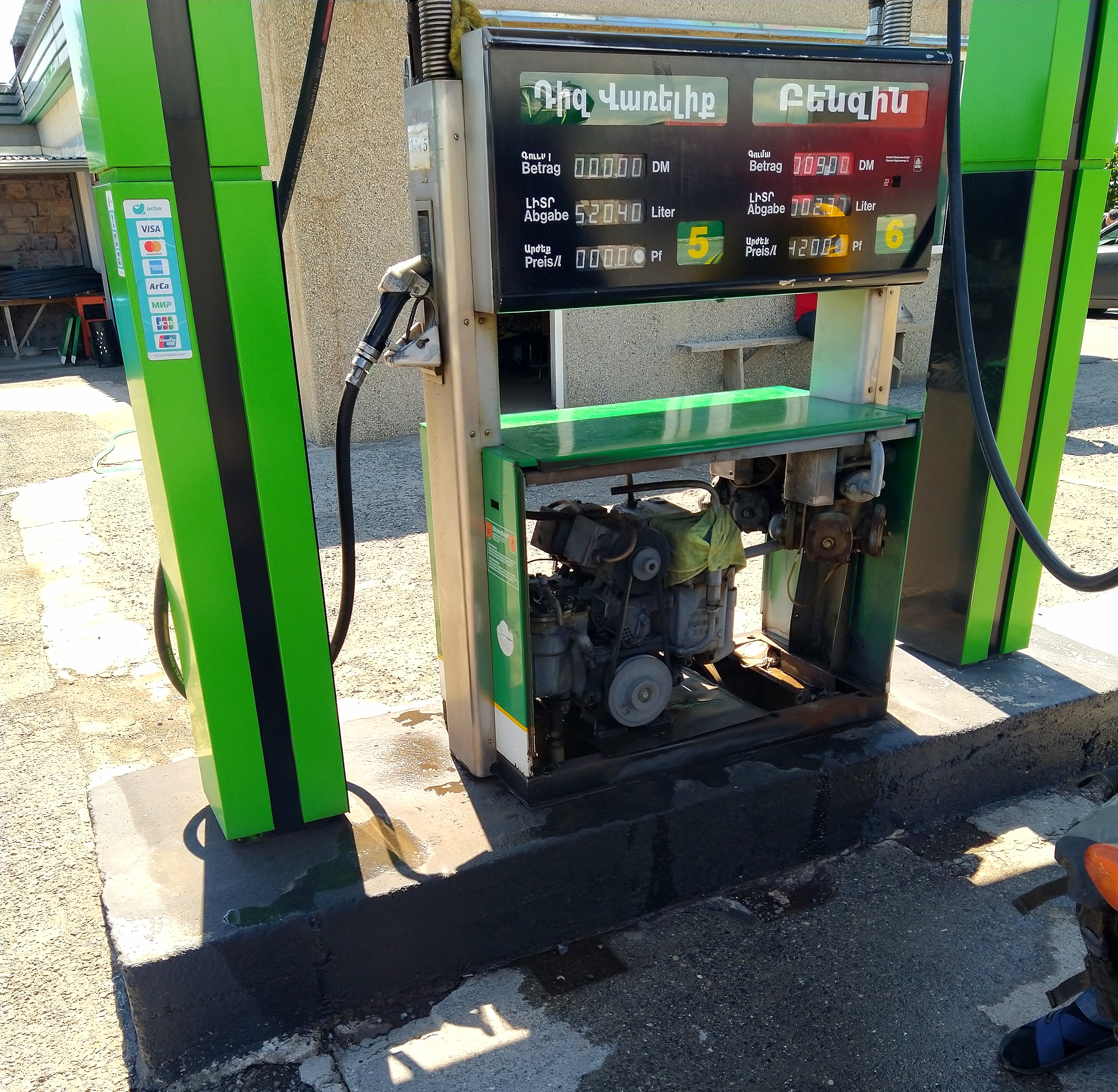
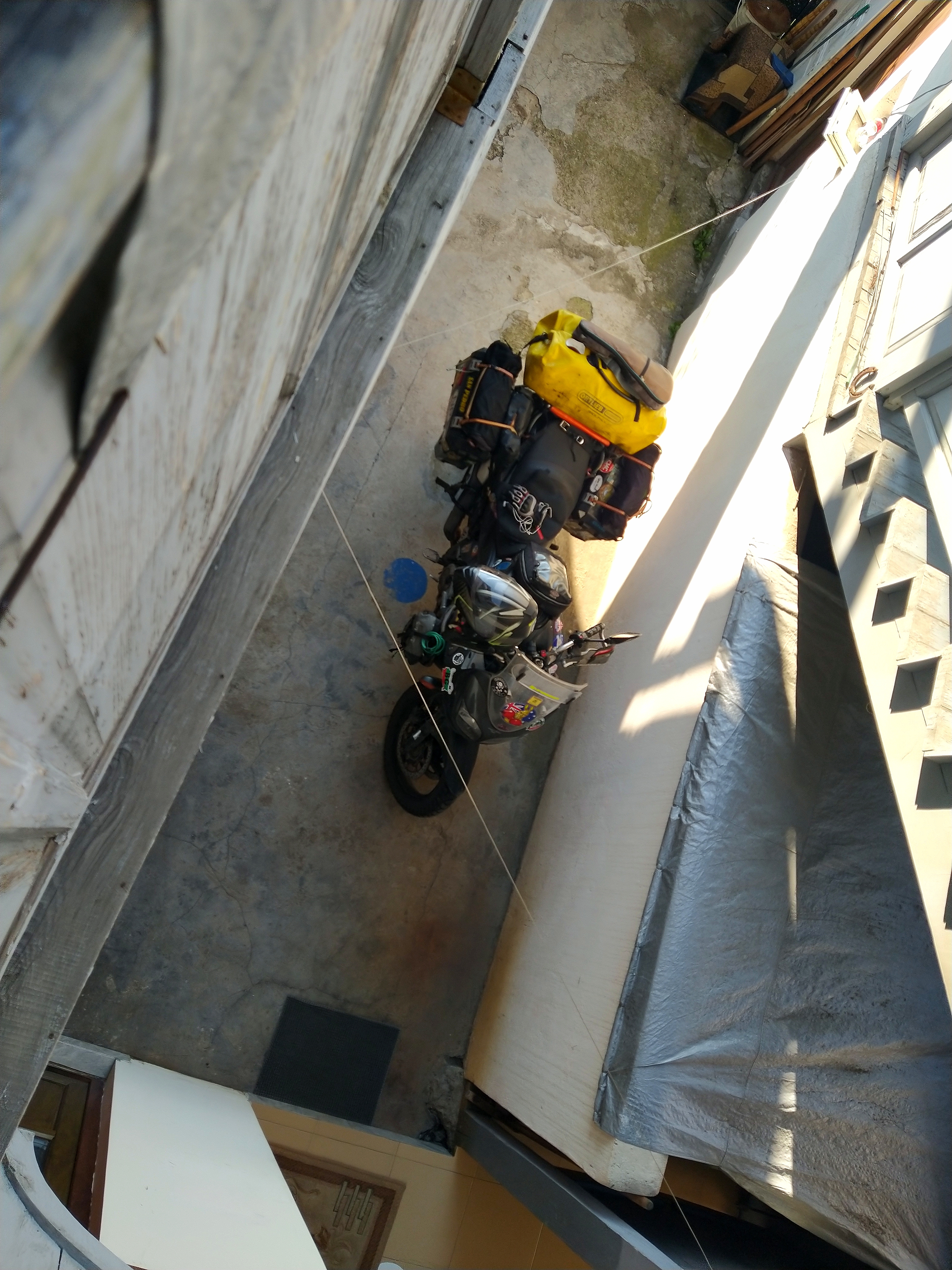
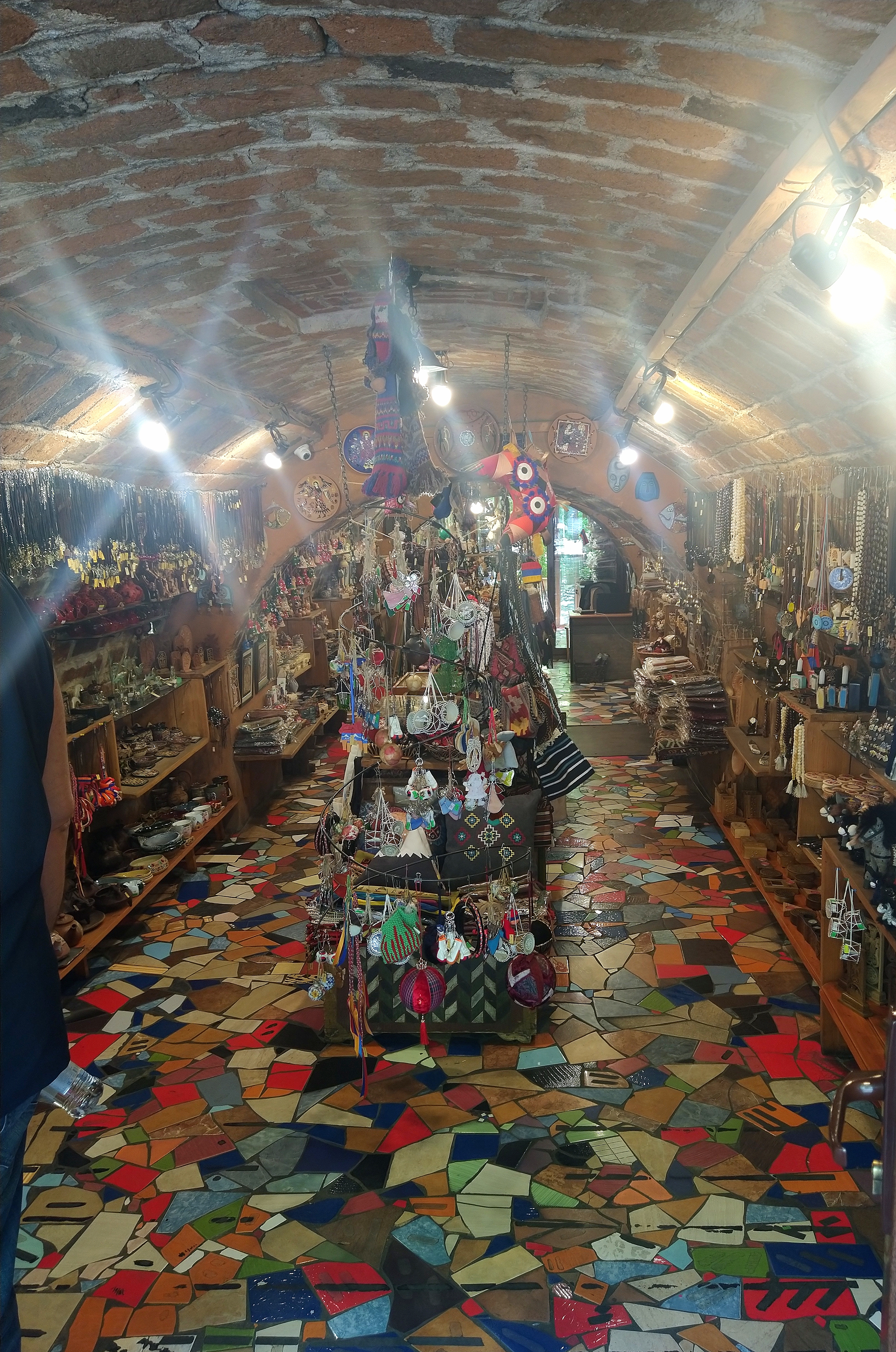
Our accommodations for the night were very basic. There was a place to park our motorcycle in the alley, which seems safe. The next morning we took a taxi into downtown Yerevan. This was one of our fantastic, didn’t expect that, moments of travel. Yerevan was modern and beautiful.
One of the places we visited was the Tsitsernakaberd Armenian Genocide Memorial Complex. In the late 1800s Armenia was still part of the Ottoman empire. Between 1912 and 1913, the Balkan wars, it is estimated that between 800,000 and 1.2 million Armenians were sent on a death march into the Syrian desert by Turkish nationalists. This was indeed a very sobering experience.
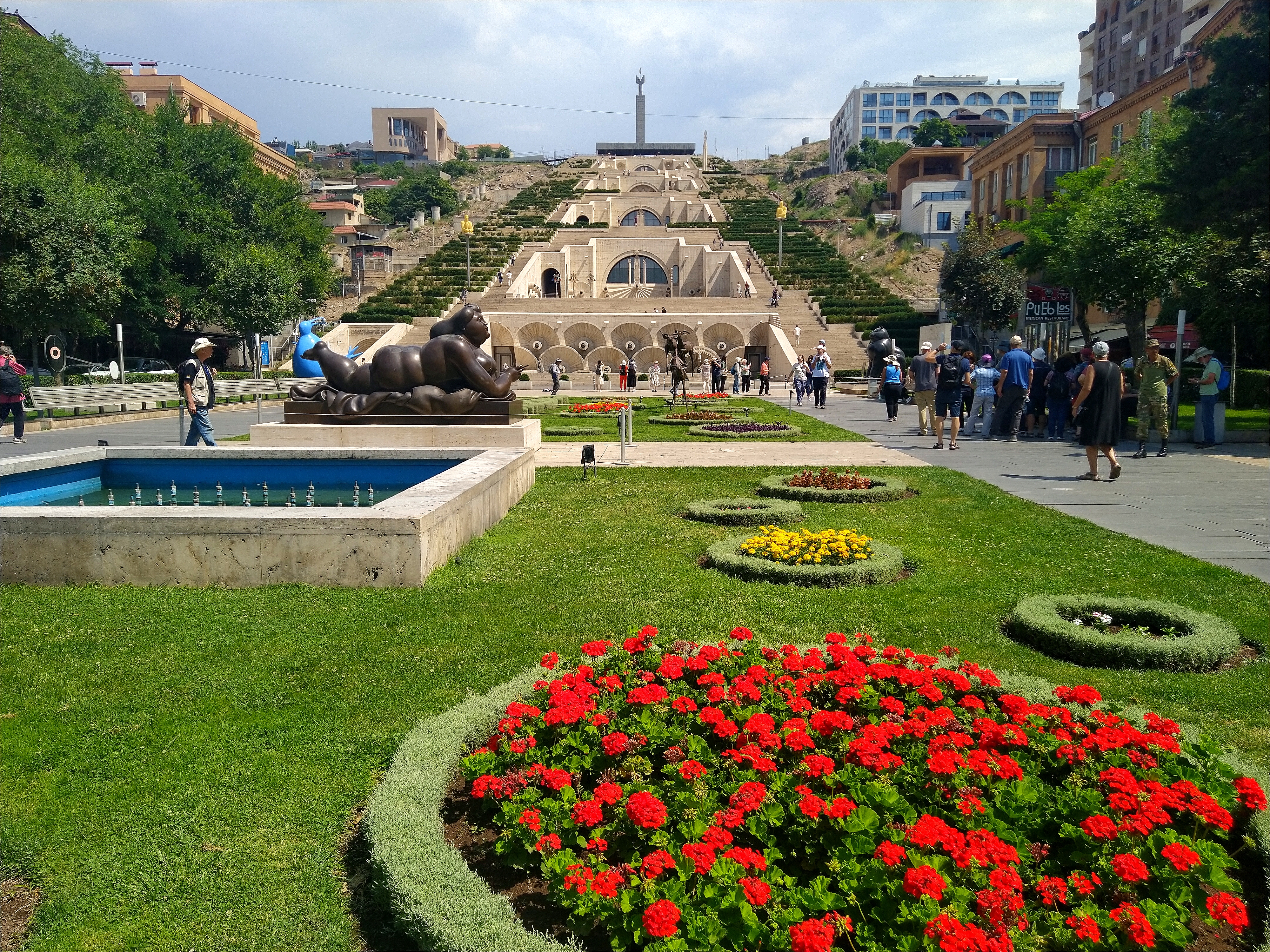
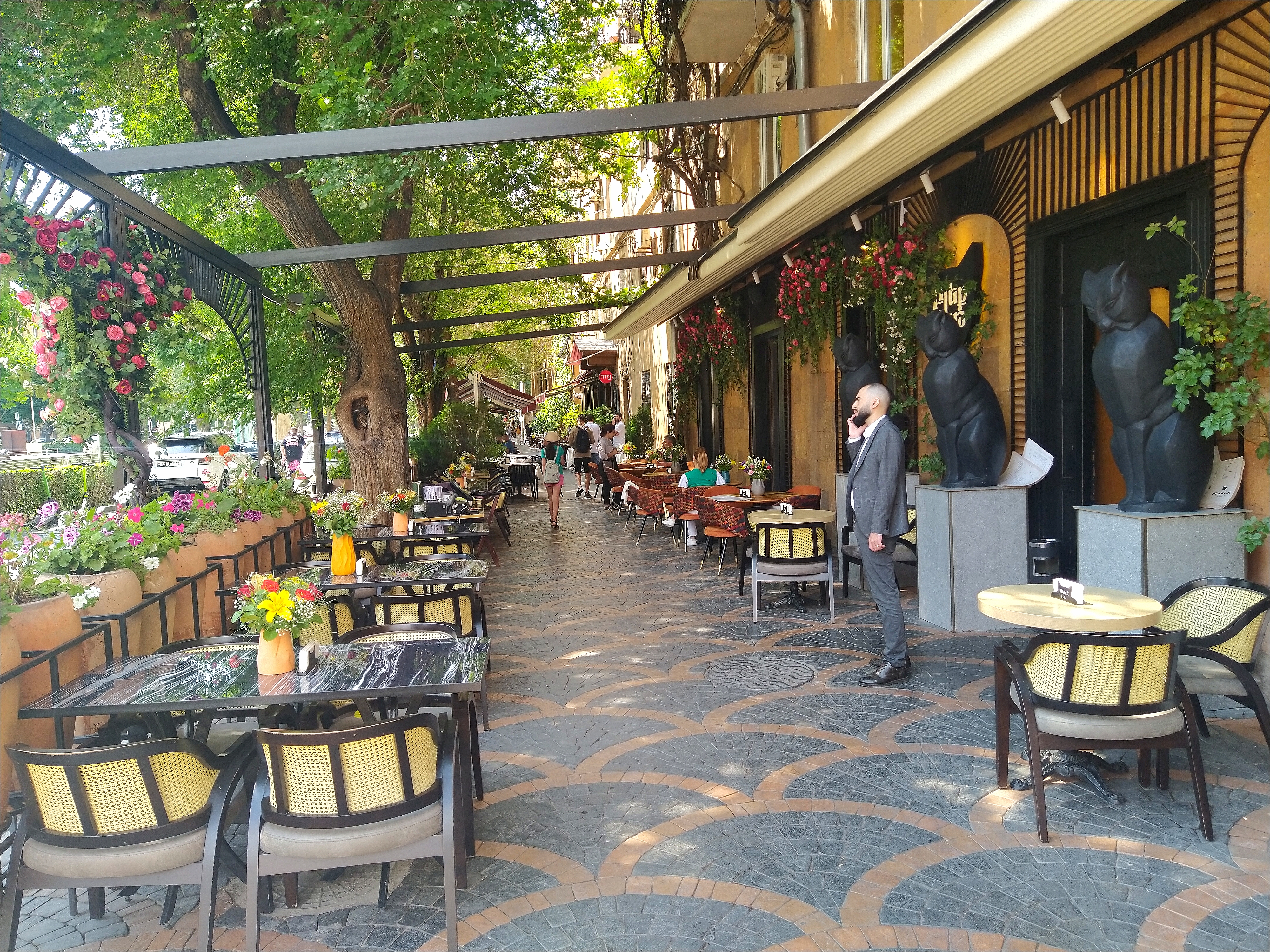
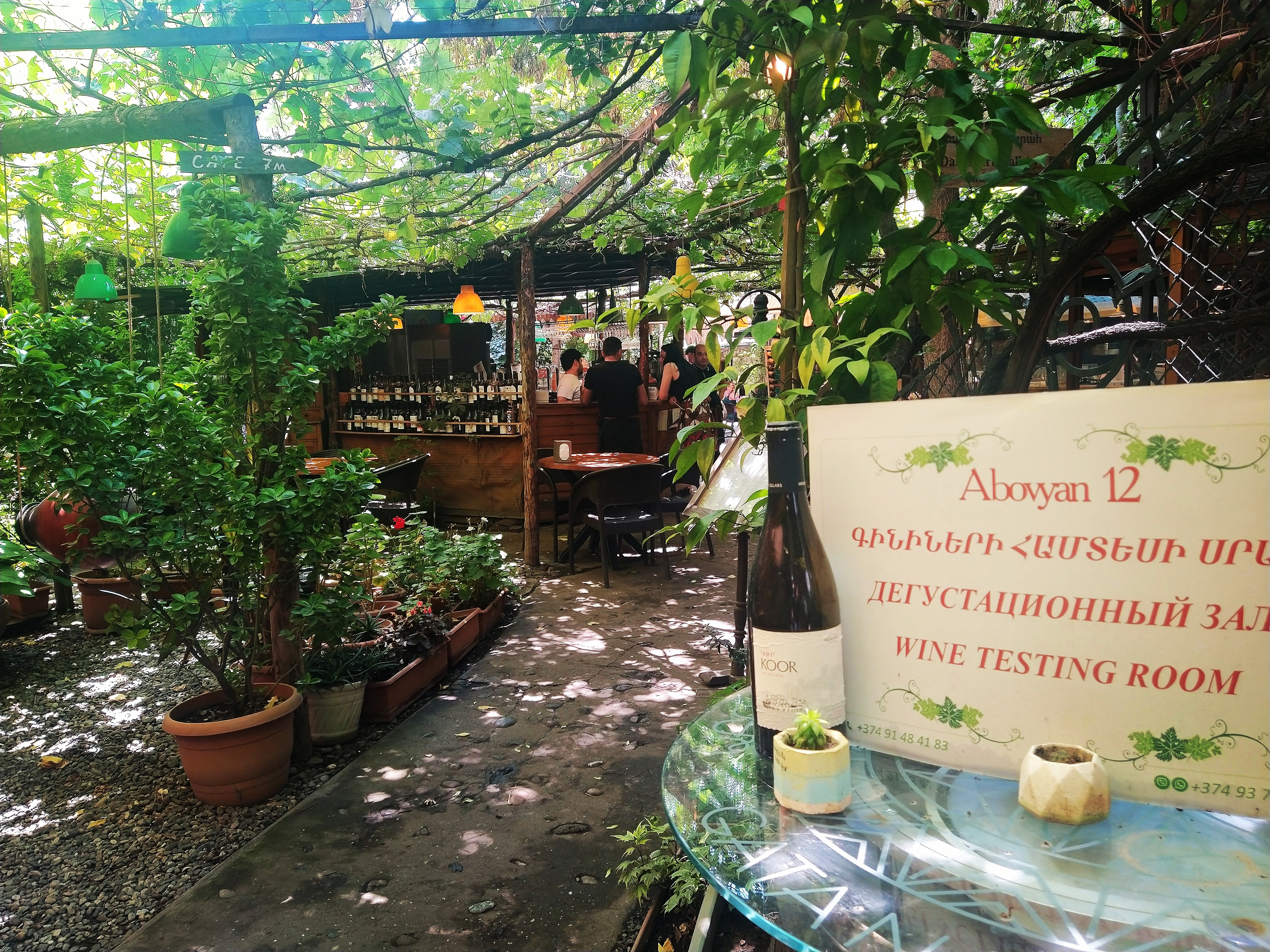
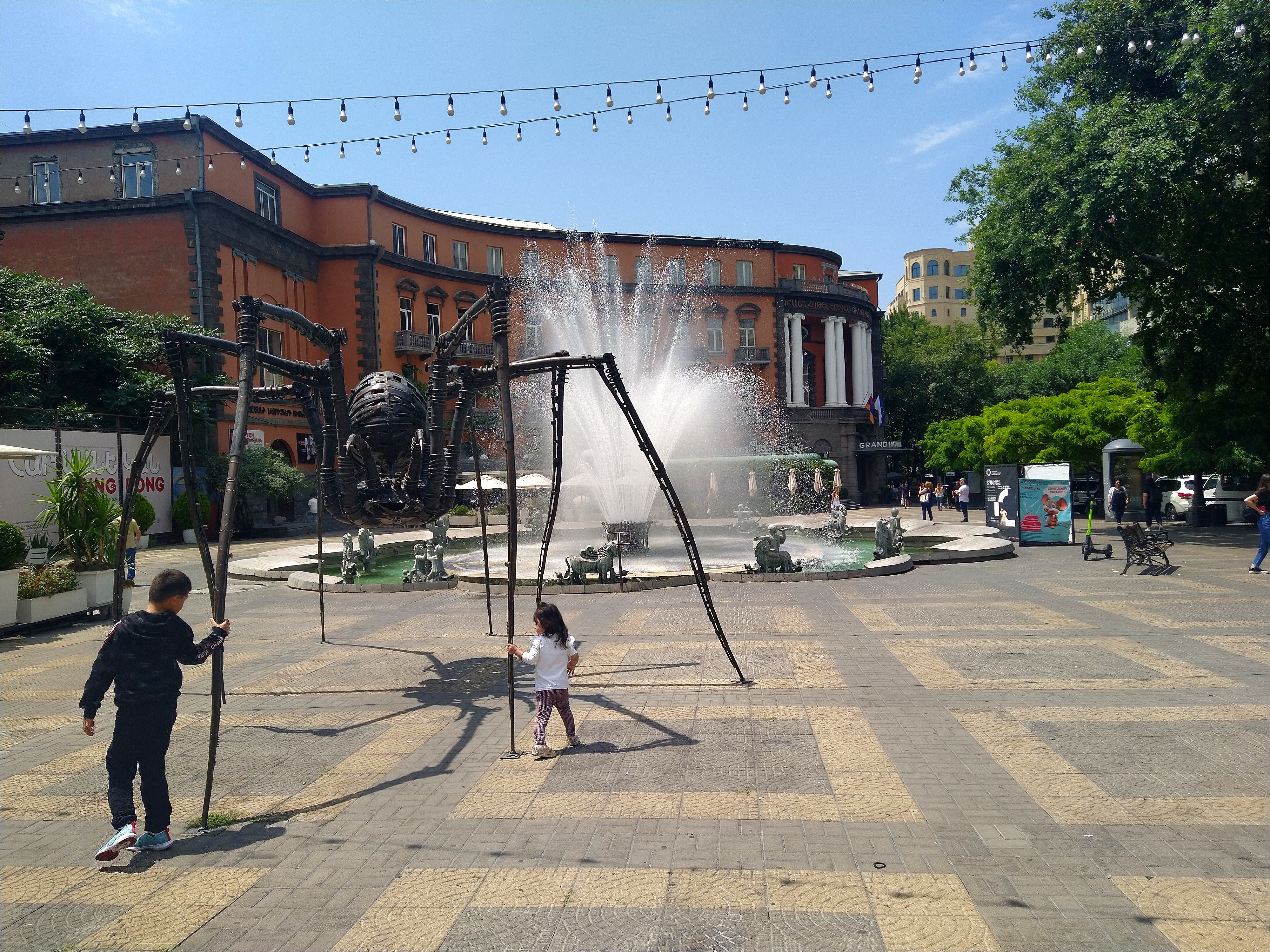
In the center of town there are many green areas with monuments such as Freedom Square, Republic square, English Park, etc., and there is also a beautiful building called the Cascade Complex Yerevan. The white building is built with travertine stone which was the only stone available in the area for such a large scale construction. The building, starting construction in 1980 and finishing in 2009, commemorates the Soviet army’s victory over Nazi Germany in World War II. Each floor showcases unique works of art. The green area in front leading to the Cascade is itself a work of art consisting a beautiful gardens and sculptures. This area of the city had cafes lining the roads with beautiful flowers and overhanging trees everywhere. There was also an astonishing downtown garden with chairs and big screen TVs celebrating “The Music That Makes Us”, the US Grammys.



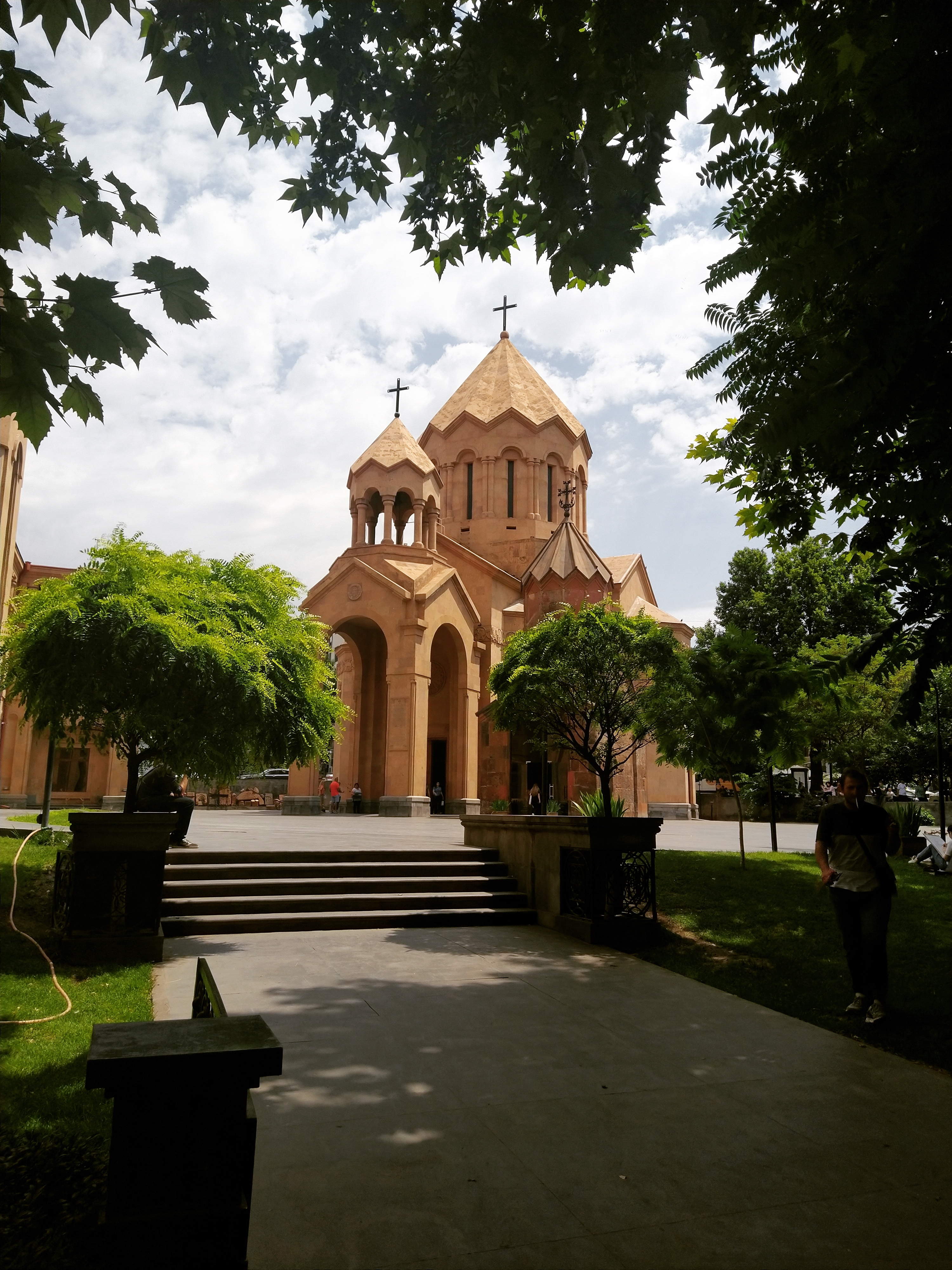
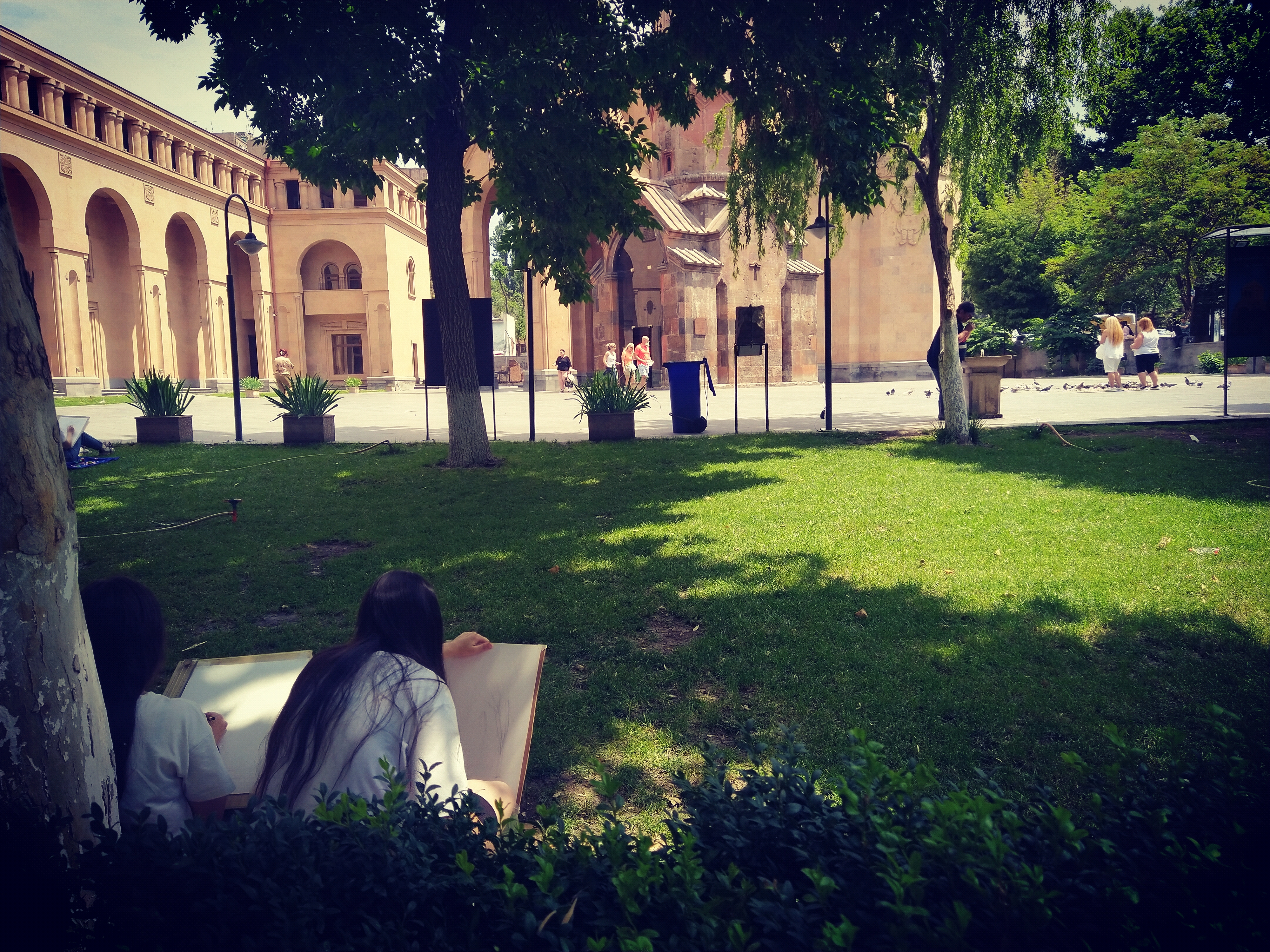
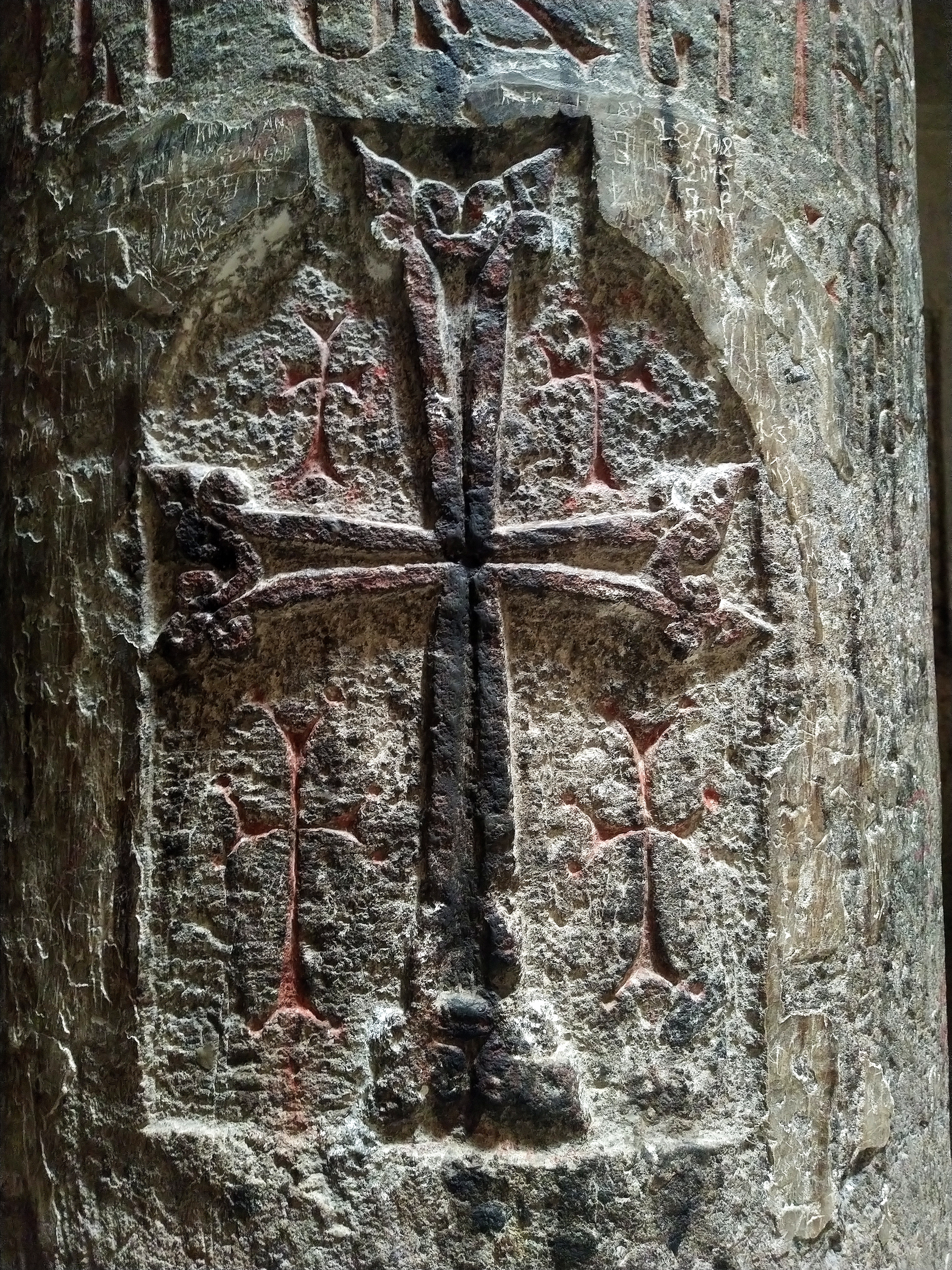
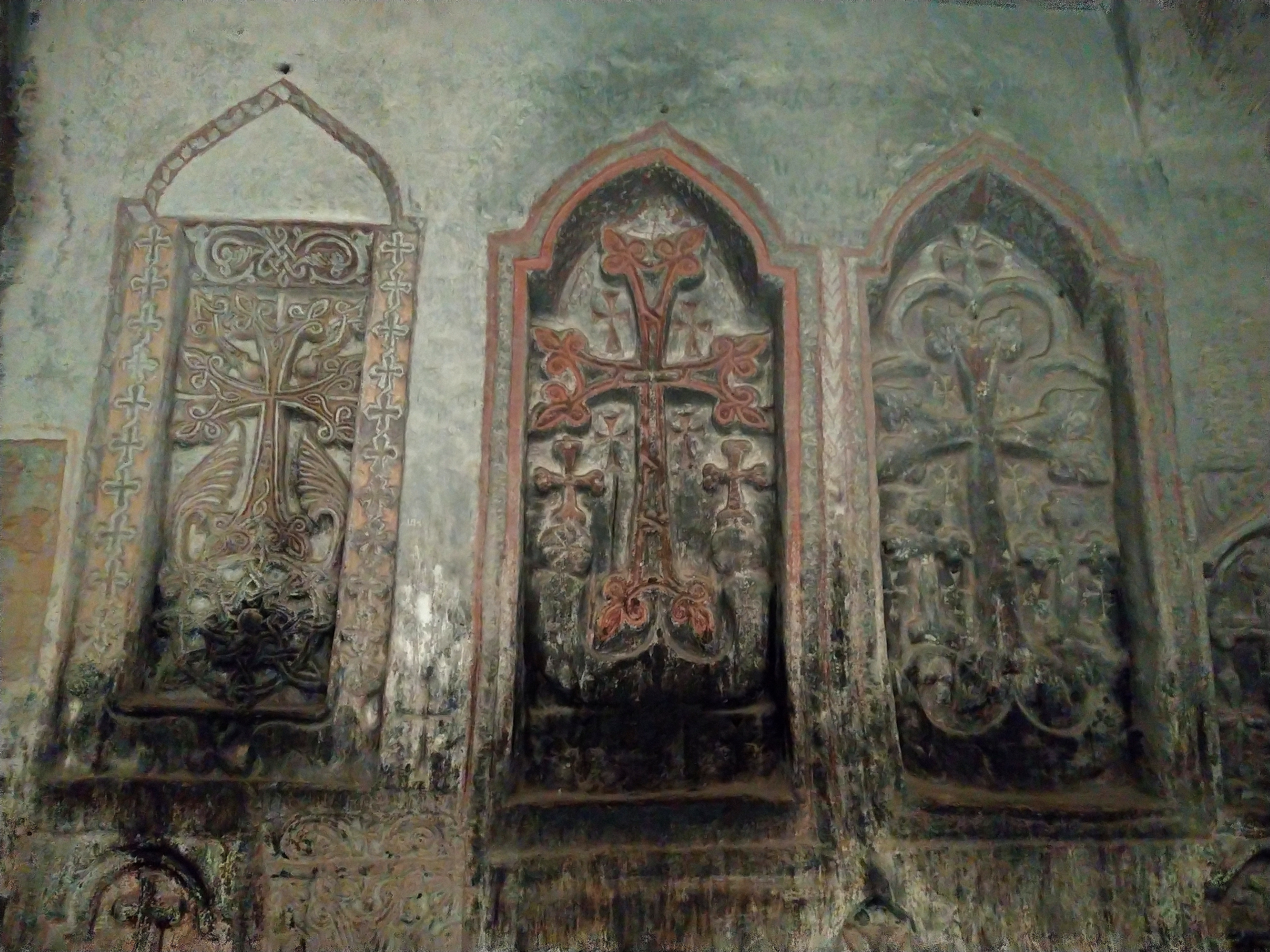
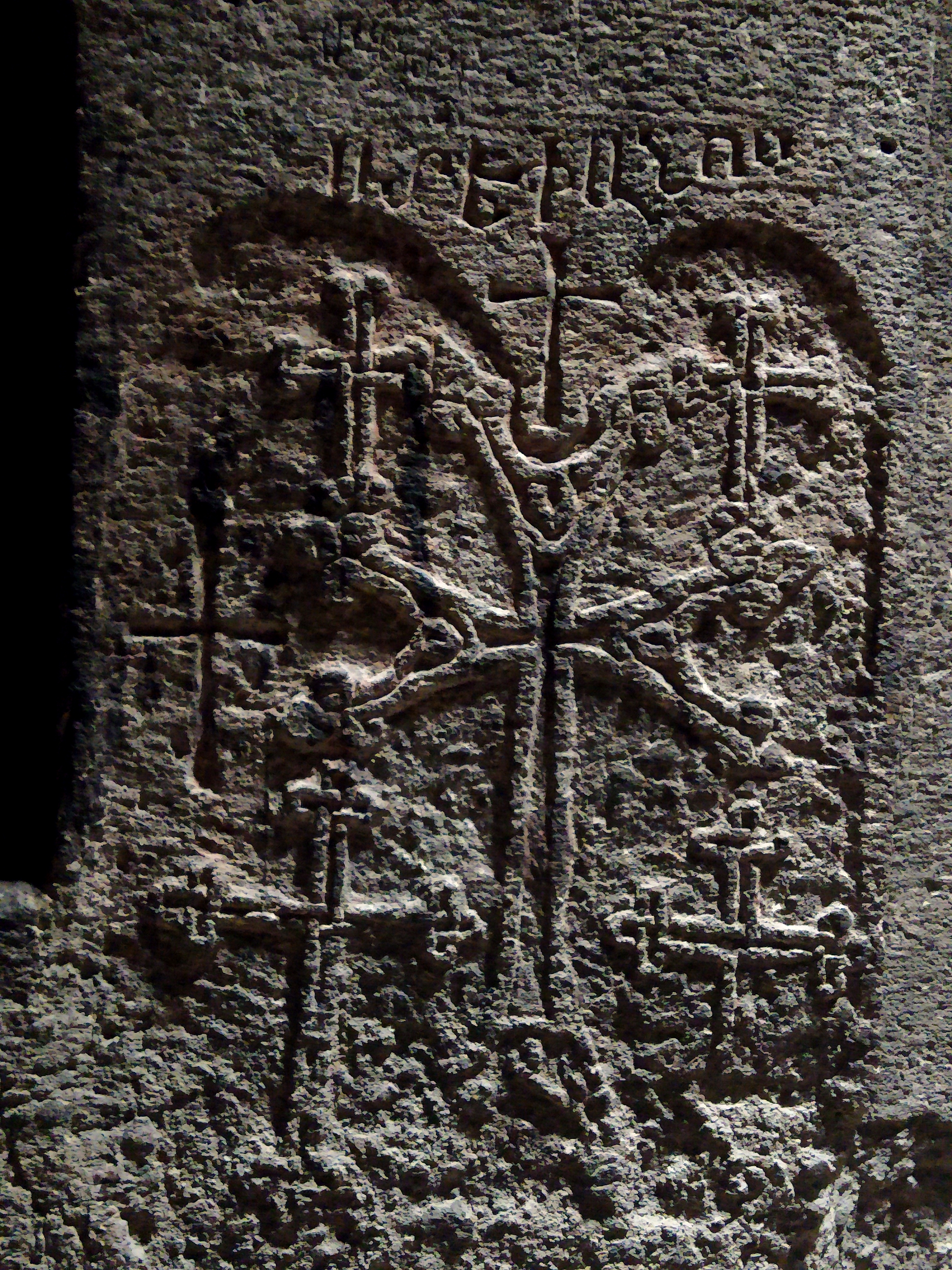
Another highlight was the oldest surviving Catholic church in Armenia, Kathighike St. Astvatsatsin Church. As it was a beautiful day the church was surrounded by artists sketching the beautiful architecture. Inside there 13th century cross stones with inscriptions carved into the stone.

Later in the afternoon we stopped for a delicious ice cream at an outdoor café. We took a selfie and the two ladies behind us looked at the camera and smiled, so we struck up a conversation with them. They were very interesting and invited us back to their family’s home for dinner that evening. Unfortunately, we had to graciously decline.

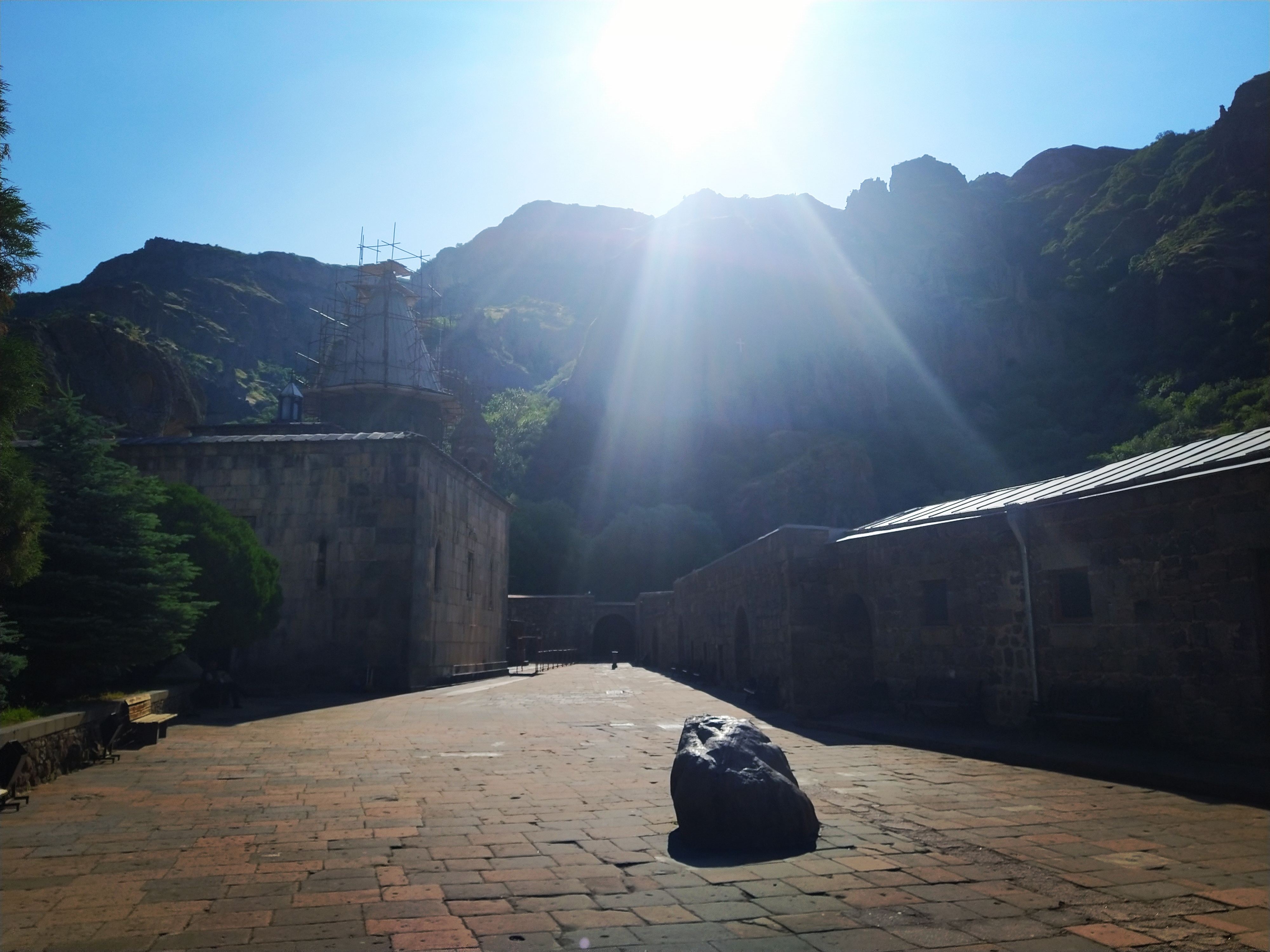
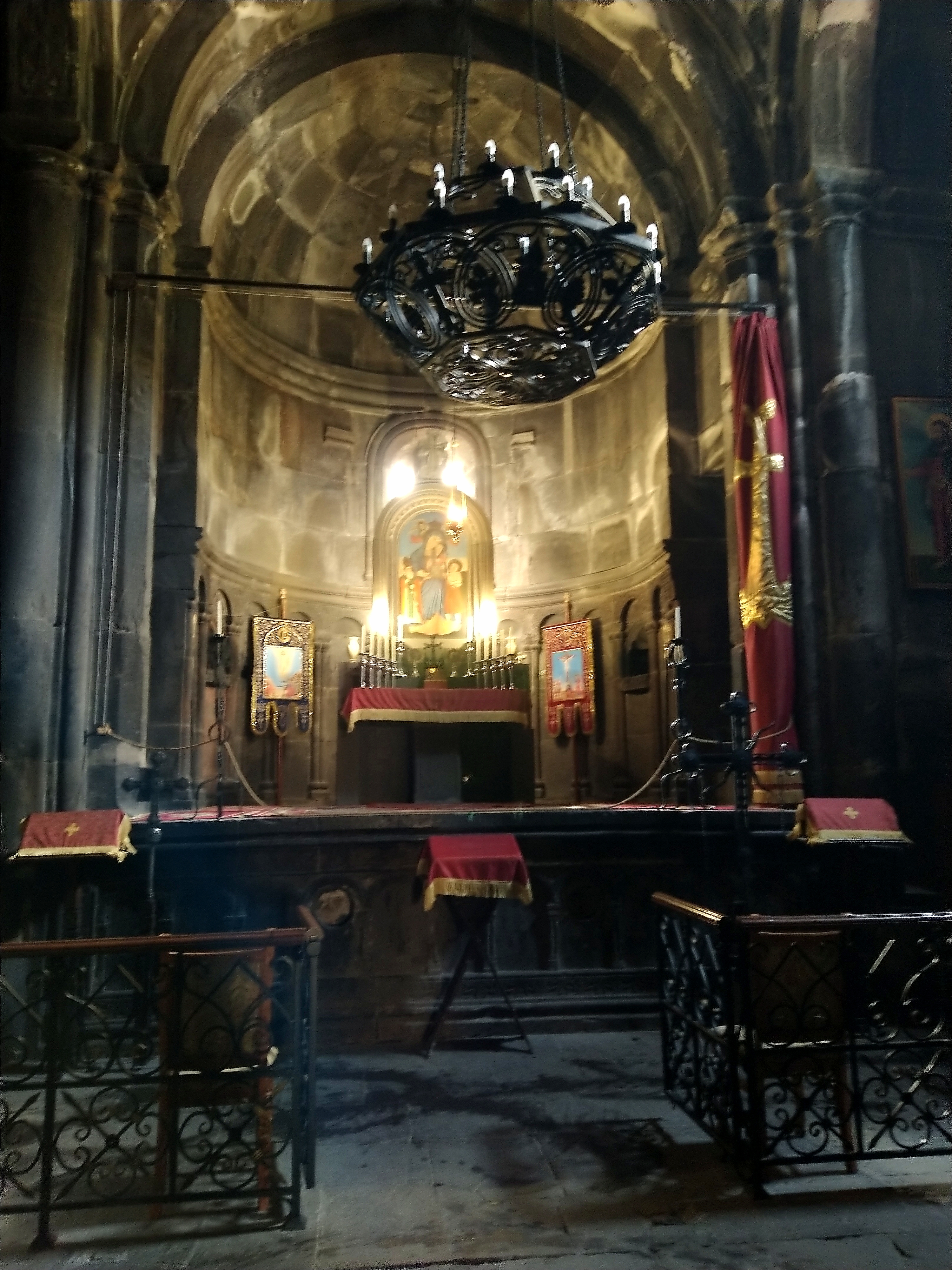
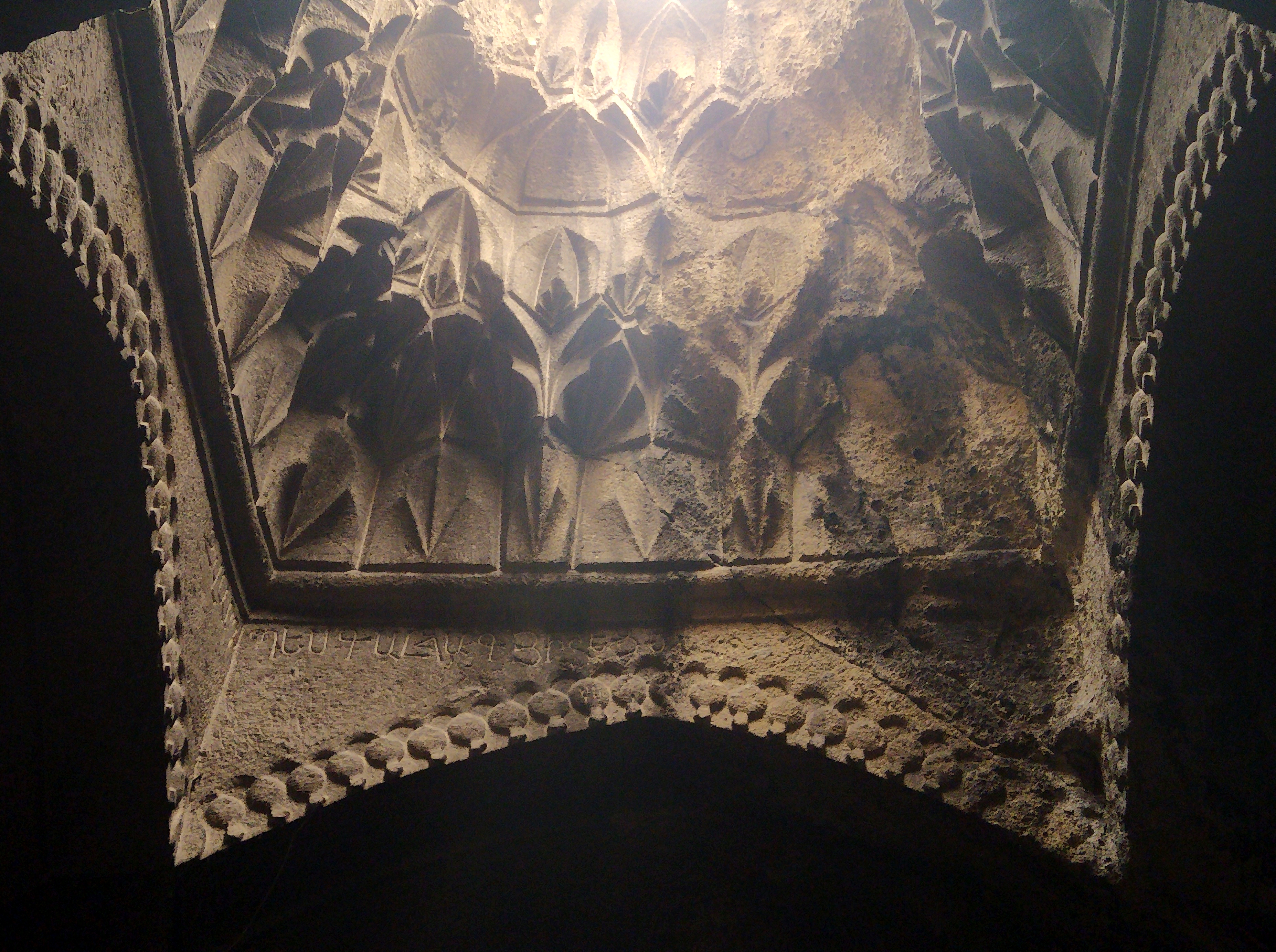
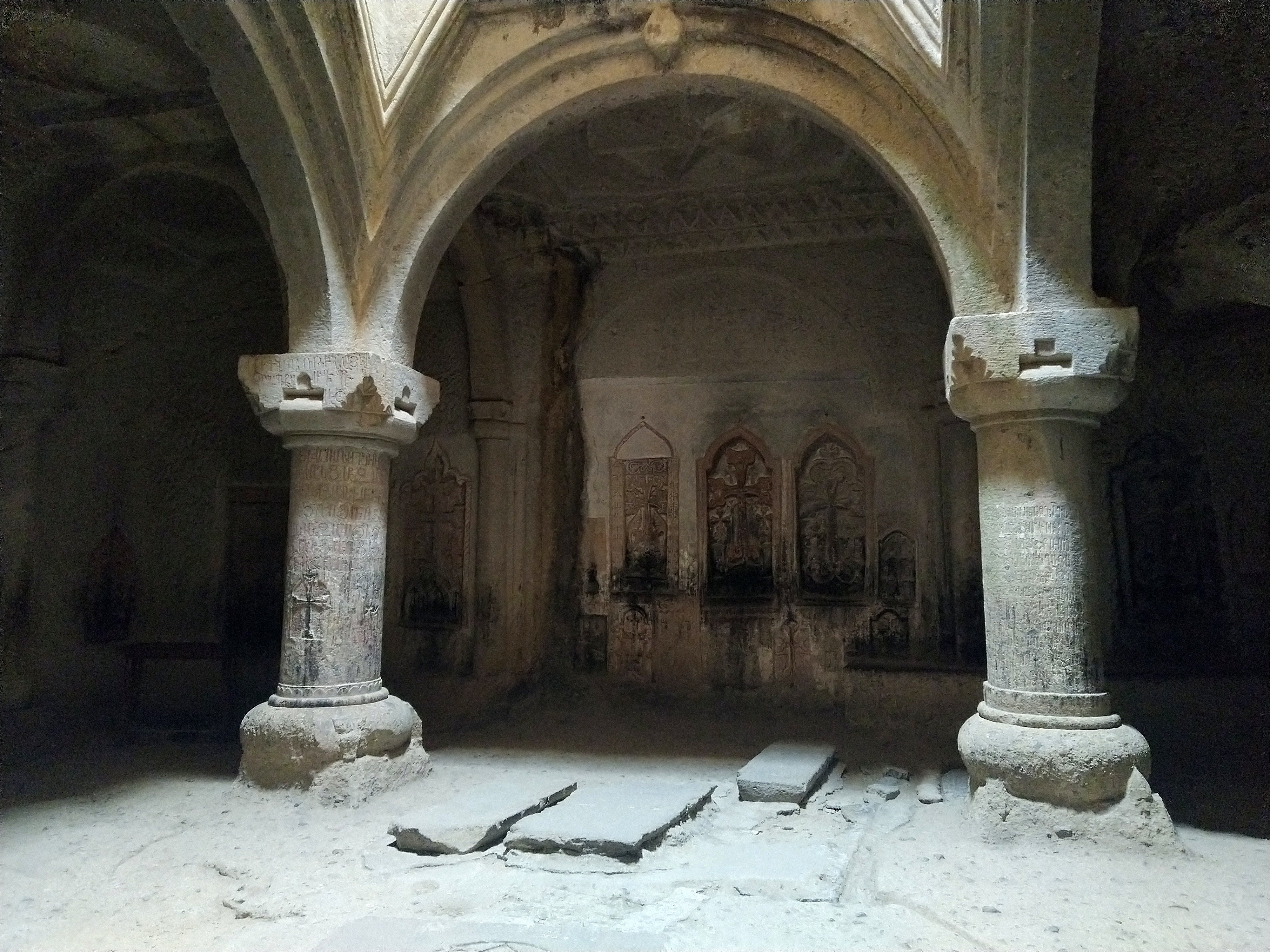
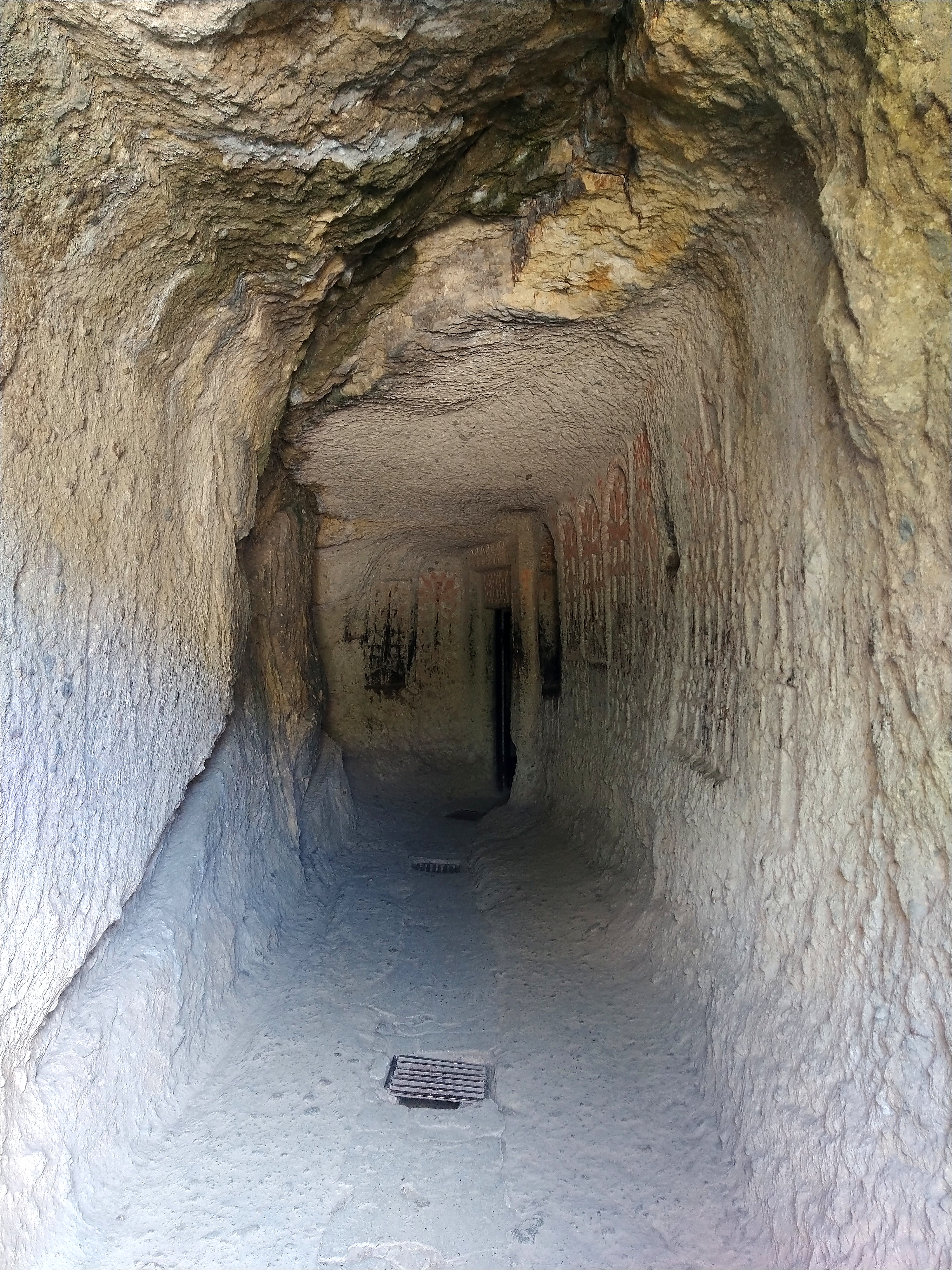
Leaving Yerevan the next morning there were three places that we wanted to see. One was unforgettable view of Mount Ararat which, as described in the Bible, is the resting place of Noah’s ark. The next place was the Symphony of Stones where the walls of the canyon look like the pipes of an organ. The third place was Geghard Monastery. This UNESCO World heritage site is a medieval monastery carved out of a mountain in The 4th century by Gregory the Illuminator at the site of a sacred spring within a cave. The name Geghard, or Geghardavank, meaning “Monastery of the Spear”, originates from the spear which had wounded Jesus at the Crucifixion, allegedly brought to Armenia by apostle Jude, called here Thaddeus, and stored amongst many other relics. Now it is displayed in the Echmiadzin treasury. The main church Churchill was built in 1215. The complex had no one around so we just wandered in amazement as to what we were seeing.

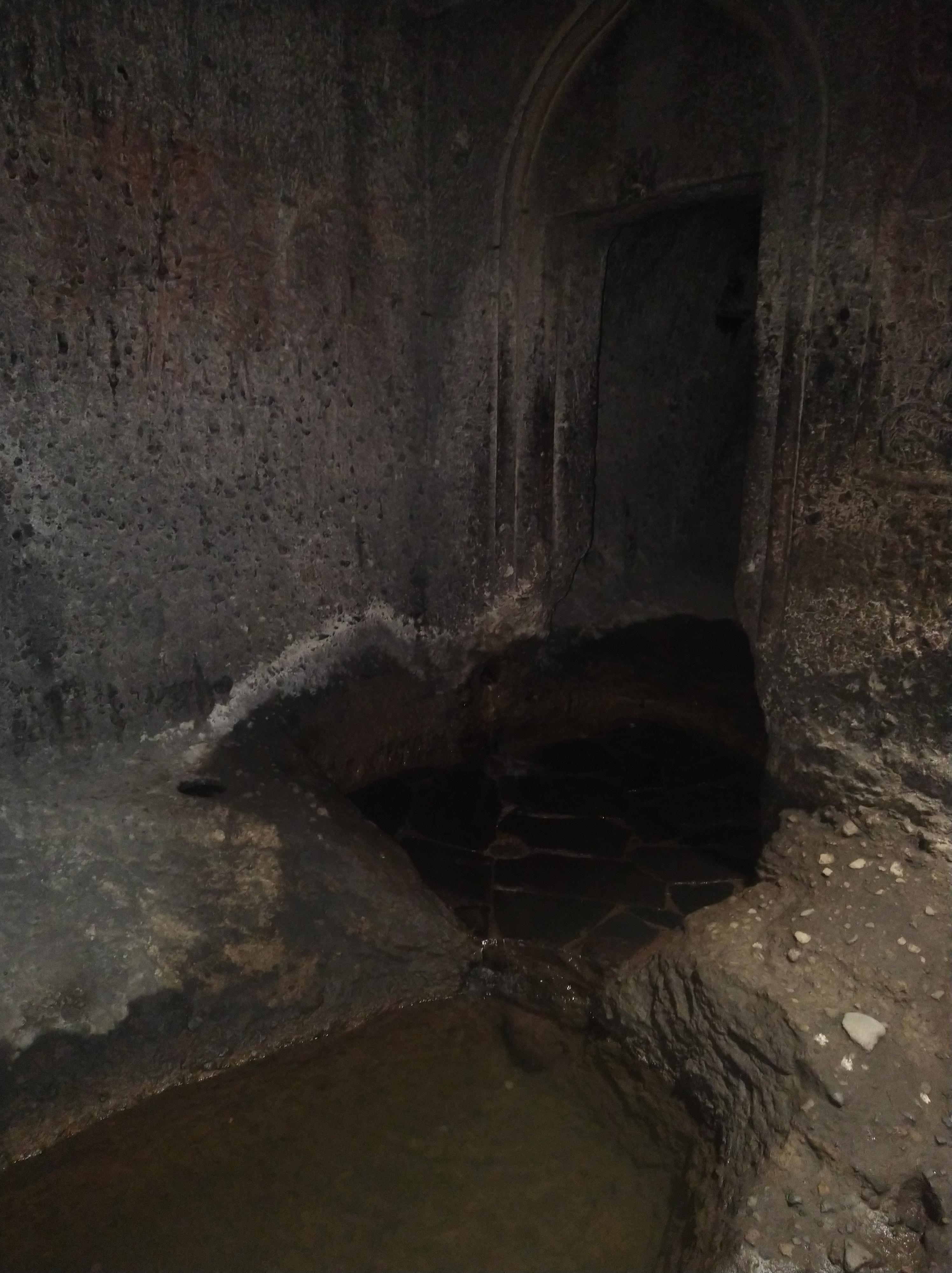
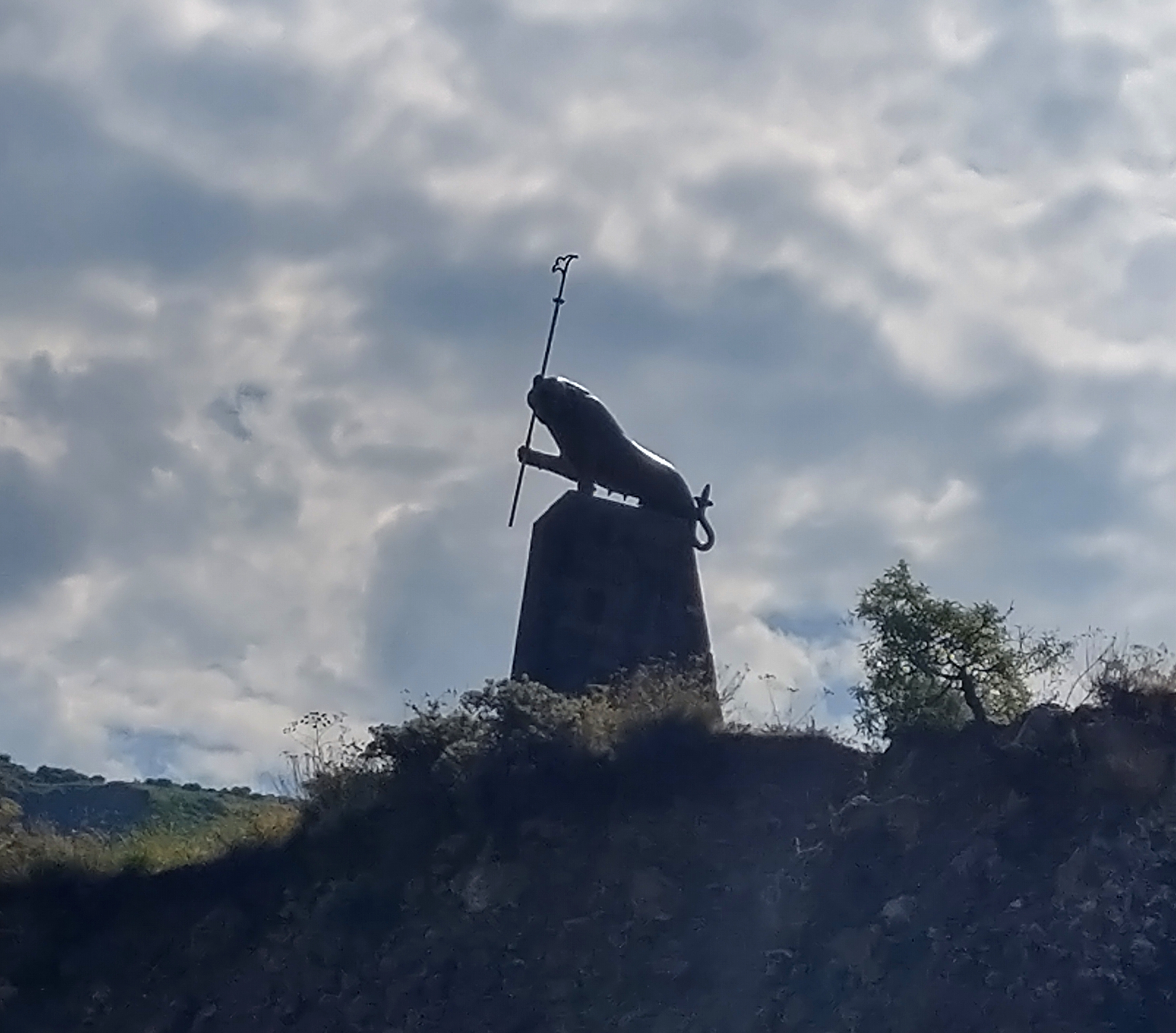
Soon we are heard beautiful, mesmerizing singing. We were drawn to the sound and it was the old original cave. This place had perfect acoustics and you could whisper and hear anywhere in the cave. The singer was singing an opera and we stood in utter amazement.
The next blog will be our return to Georgia and then to Turkey.
Cheers,
2WANDRRs
 2WANDRRs
Recent Comments